Explore our network of country and industry based websites to access localized information, product offerings, and business services across our group.
Log in to start sending quotation requests for any product.
Don't have an account? Sign Up Here
Home Monosodium Glutamate Supply Chain: Global Sourcing and B2B Market Insights
Trade Insights | Supply Chain | 27 August 2026
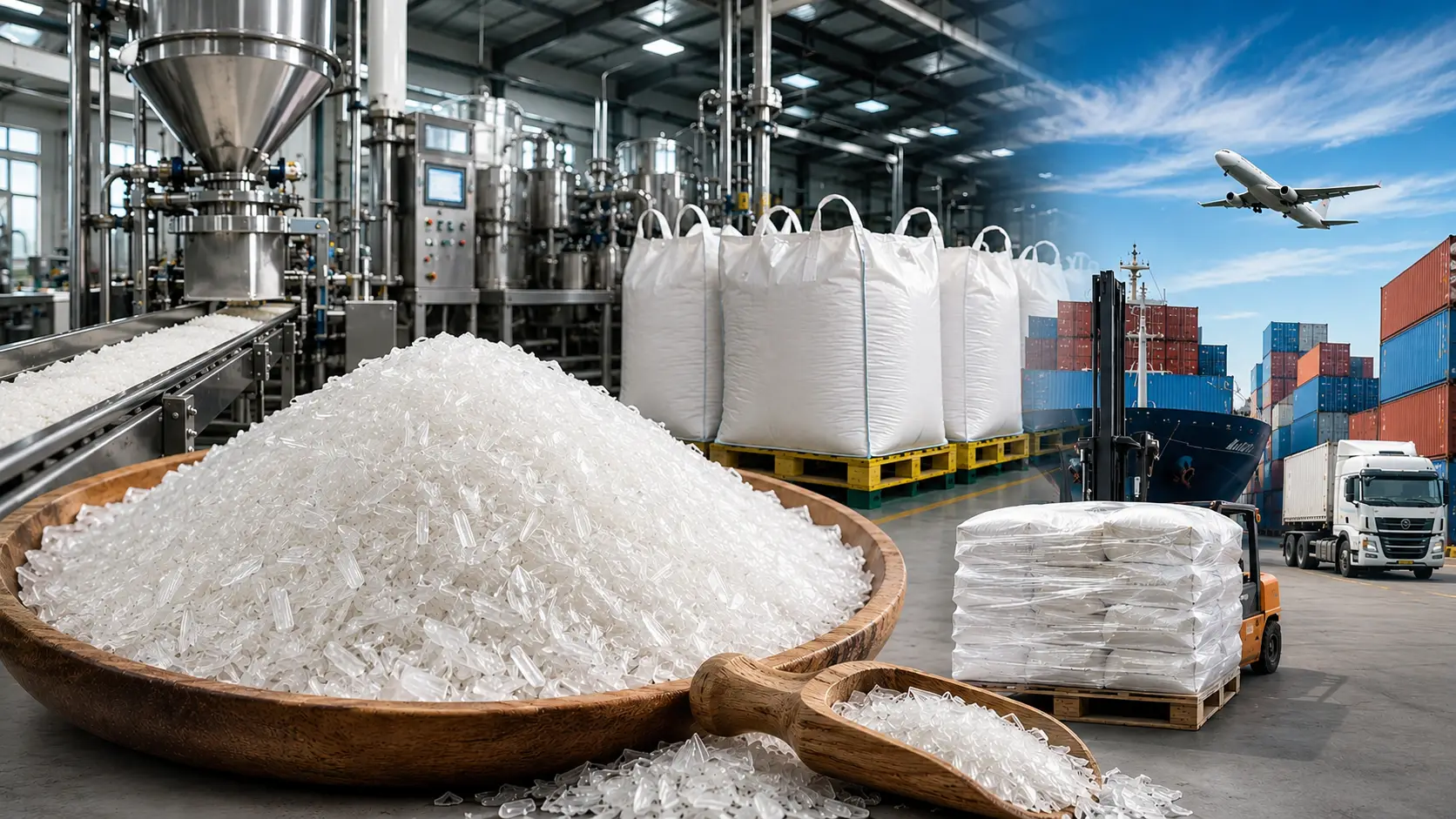
Monosodium Glutamate and Its Role in the Food Supply Chain
Global MSG Production and Regional Supply Dynamics
Raw Materials and Manufacturing Considerations
Applications Driving Monosodium Glutamate Demand
Procurement Priorities for B2B MSG Buyers
Logistics, Storage, and International Sourcing
Market Outlook and Strategic Supplier Selection
Conclusion: Building a Reliable MSG Supply Strategy
Sources
Monosodium Glutamate, commonly known as MSG, is the sodium salt of glutamic acid and is widely used as a flavor enhancer in food manufacturing. Its commercial importance comes from its ability to enhance savory characteristics already present in food formulations. The U.S. Food and Drug Administration identifies MSG as a flavor enhancer and lists it among substances used in food applications.
For B2B buyers, MSG should therefore be considered not simply as a finished food ingredient but as an important component within a broader seasoning and food-processing supply chain. Its demand is closely connected with processed foods, instant foods, sauces, savory snacks, seasoning blends, and other formulations where consistent taste performance is commercially important.
The supply chain also benefits from MSG's established international identification. The FAO/WHO JECFA database identifies Monosodium L-Glutamate as MSG or sodium glutamate and lists INS 621 under the Codex GSFA system. This provides an important reference point for international procurement, documentation, and regulatory evaluation.
For food manufacturers, interruptions in an ingredient supply can affect production planning, formulation consistency, customer commitments, and inventory costs. Procurement teams therefore evaluate MSG suppliers on more than quoted price. Availability, specification consistency, documentation, packaging, shipment planning, and supplier responsiveness can all influence the commercial value of a sourcing arrangement.
Asia represents a central production and consumption region for the global MSG industry. Industry market analysis indicates that Asia accounted for an estimated 80–85% of global MSG production and consumption in 2025, with China, Indonesia, Vietnam, and Thailand identified as important manufacturing hubs.
This geographic concentration creates significant opportunities for B2B importers and distributors sourcing MSG from Asian production centers. Buyers can potentially access established manufacturing ecosystems while benefiting from established regional shipping routes and proximity to major food-processing markets across Asia, the Middle East, Africa, and other international destinations.
Demand is supported by the continued expansion of packaged foods, convenience foods, savory snacks, instant noodles, foodservice, and seasoning products. In Southeast Asia, for example, growing consumption of convenience-oriented food products supports ongoing demand for flavor-enhancing ingredients. Market analysis for Q4 2025 also identified a regional MSG growth trajectory of approximately 3–5% CAGR.
For international buyers, regional diversification is becoming increasingly relevant. Rather than relying exclusively on a single origin, procurement teams may evaluate multiple qualified origins according to price, lead time, specification, freight economics, and supply continuity. This approach can reduce exposure to localized production or logistics disruptions.
Modern MSG production is generally based on fermentation rather than the historical extraction of glutamate from seaweed. FDA explains that commercial MSG can be produced through fermentation of carbohydrate sources including starch, sugar beets, sugar cane, or molasses.
This manufacturing route makes upstream raw-material economics an important part of the supply chain. Changes in carbohydrate feedstock availability, energy expenses, fermentation costs, utilities, and processing conditions can influence the economics of MSG production. Consequently, B2B buyers should consider market conditions beyond the final product quotation.
Food-industry procurement requires suppliers to maintain appropriate product specifications and documentation. Depending on the destination market and application, buyers may require technical specifications, certificates of analysis, food-grade documentation, regulatory declarations, packaging information, and other quality records.
MSG is identified by the FAO/WHO JECFA system as Monosodium L-Glutamate, while FDA's food-substance database identifies monosodium glutamate with CAS No. 142-47-2 and recognizes its use as a flavor enhancer, among other technical effects.
The strongest commercial relevance of MSG comes from its use as a flavor enhancer. FDA categorizes monosodium glutamate among flavor enhancers, which are ingredients designed to enhance flavors already present in foods rather than provide an entirely separate flavor profile.
This positioning makes MSG relevant to manufacturers of seasoning mixes, instant foods, savory snacks, sauces, prepared foods, soups, and other processed-food categories. For industrial buyers, application requirements can determine the appropriate purchasing specification, packaging format, shipment size, and quality documentation.
MSG also participates in supply chains serving foodservice and commercial food preparation. As restaurants, catering businesses, seasoning manufacturers, and packaged-food producers seek consistent flavor profiles at commercial scale, reliable access to standardized ingredients becomes an important procurement consideration.
The diversity of end uses means that MSG demand is not dependent on a single food category. Instead, it is distributed across multiple segments where savory flavor enhancement is valuable. This broad application base can provide suppliers and distributors with opportunities to serve different buyer groups while helping manufacturers manage sourcing flexibility.
When sourcing MSG in bulk, procurement teams should evaluate supplier capabilities systematically. Product specification, manufacturing consistency, available documentation, minimum order quantities, packaging, lead time, export experience, and communication should be assessed alongside price.
Regulatory suitability is equally important. FDA notes that substances added to food must have an appropriate regulatory basis for their intended use, including authorization or applicable exclusions such as GRAS status where relevant.
The lowest quoted product price does not necessarily represent the lowest procurement cost. Buyers should assess the complete landed-cost structure, including product price, packaging, freight, insurance where applicable, duties, port charges, warehousing, financing, and potential inventory carrying costs.
For MSG buyers importing across borders, shipment consolidation and origin selection can also affect purchasing economics. A supplier offering competitive product pricing but inconsistent lead times may create higher downstream costs than a supplier providing more predictable deliveries and stronger documentation.
MSG sourcing is closely connected with international logistics because major production centers and major consumption markets are often located in different countries. Buyers therefore need procurement strategies that connect supplier availability with shipping schedules, destination requirements, and inventory planning.
In 2025, Asian MSG supply conditions were described as relatively stable, although market participants continued to monitor energy and feedstock costs. Industry analysis also noted that supply-chain disruptions had largely normalized while some buyers maintained higher-than-usual safety stocks.
For industrial food manufacturers, inventory strategy should reflect consumption volume and replenishment lead time. Maintaining appropriate safety stock can protect production against unexpected shipping delays, temporary supply shortages, or changes in supplier availability.
Distributors can also play an important role by aggregating demand and providing access to multiple supply origins. This can be particularly valuable for buyers that require recurring shipments but do not want their procurement strategy to depend entirely on a single manufacturer or country of origin.
The medium-term MSG market outlook remains closely tied to food-processing activity, packaged-food consumption, convenience foods, seasoning applications, and foodservice demand. The Asian market is particularly significant because of its large production base and strong regional consumption.
For procurement professionals, this environment makes supplier selection a strategic activity rather than a simple transactional purchase. Buyers should compare suppliers based on product quality, commercial terms, origin diversity, logistics capability, documentation, and the ability to support recurring requirements.
A resilient MSG sourcing model can combine qualified manufacturers, experienced distributors, appropriate safety stock, and regular market monitoring. This approach allows buyers to respond more effectively to changes in feedstock costs, freight conditions, production availability, and regional demand.
Tradeasia, Chemtradeasia, and Tradechem Marketplace can support B2B chemical and ingredient sourcing by connecting buyers with supply options and facilitating commercial discussions around product requirements, quantities, and international trade needs. For procurement teams, the objective is not simply to purchase MSG, but to establish a dependable supply channel aligned with production schedules and market requirements.
Monosodium Glutamate remains an important ingredient in the international food-processing supply chain, supported by its established role as a flavor enhancer and its broad use across savory food applications. Its global supply structure, particularly the importance of Asian manufacturing centers, creates significant opportunities for international B2B sourcing.
For buyers, successful MSG procurement depends on balancing specification, regulatory suitability, price, availability, logistics, documentation, and supply continuity. Companies that combine supplier diversification with disciplined inventory planning can strengthen their ability to manage changing market conditions.
As global food manufacturers and distributors continue to optimize sourcing networks, a reliable B2B marketplace and international chemical trading partner can simplify supplier discovery and commercial coordination. Tradeasia / Chemtradeasia / Tradechem Marketplace can serve as a sourcing channel for businesses seeking to evaluate Monosodium Glutamate supply opportunities according to their application, volume, origin, and international procurement requirements.
We're committed to your privacy. Tradeasia uses the information you provide to us to contact you about our relevant content, products, and services. For more information, check out our privacy policy.


 English
 Indonesian
 简体字
简体字
 العربية
 Español
 Français
 Português
 日本語
日本語
 한국어
한국어
 Tiếng Việt



















