Explore our network of country and industry based websites to access localized information, product offerings, and business services across our group.
Log in to start sending quotation requests for any product.
Don't have an account? Sign Up Here
Home Potassium Acetate Applications and B2B Buyer Sourcing Guide
Trade Insights | Applications and Buyers | 27 August 2026
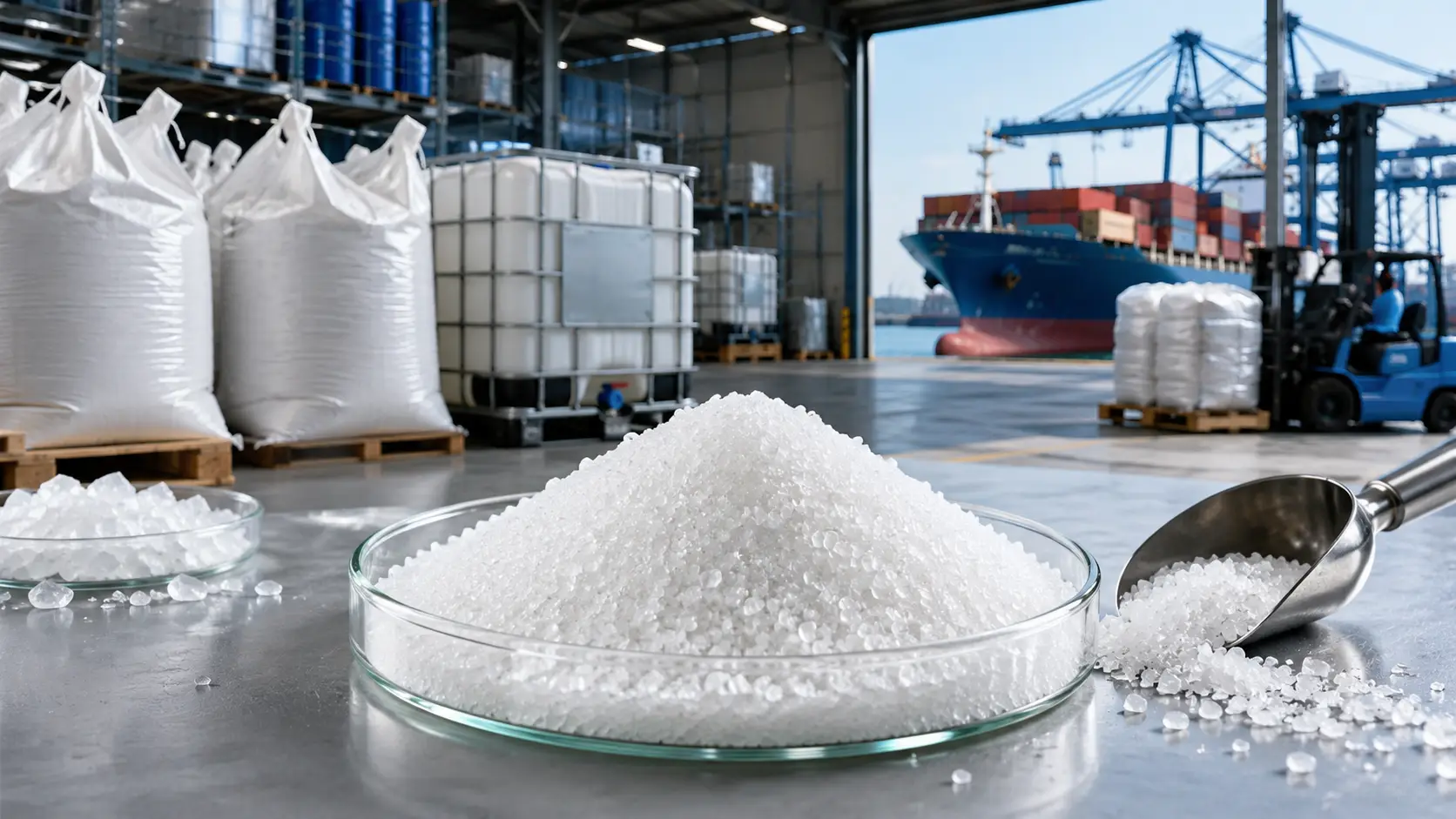
Potassium Acetate in the B2B Chemical Market
Potassium Acetate Applications in Food Processing
Industrial and Technical Applications of Potassium Acetate
Who Buys Potassium Acetate and Why
Key Sourcing Considerations for Buyers
Market and Procurement Outlook for Potassium Acetate
Conclusion: Building a Reliable Potassium Acetate Supply Strategy
Sources
Potassium acetate is the potassium salt of acetic acid, identified by CAS No. 127-08-2 and molecular formula C₂H₃KO₂. PubChem lists its molecular weight at approximately 98.14 g/mol, while describing the substance as a potassium salt with applications spanning food, chemical, pharmaceutical, and industrial contexts.
For B2B procurement teams, potassium acetate is particularly relevant because its value is linked to function rather than simply chemical identity. In food applications, international Codex references identify potassium acetate as INS 261(i) and classify it as an acidity regulator and preservative. This makes application suitability, specification, purity, and regulatory documentation central considerations when selecting a commercial supplier.
The commercial buyer base can extend across food processors, ingredient distributors, pharmaceutical manufacturers, chemical companies, and industrial users. PubChem records uses associated with pH regulation, preservatives, chemical synthesis, textile processing, anti-freeze applications, and industrial de-icing, demonstrating the breadth of potassium acetate's technical relevance.
This diversity means that purchasing decisions should begin with the intended application rather than with price alone. A food manufacturer may prioritize food-grade documentation and permitted-use status, while an industrial buyer may place greater emphasis on technical specifications, packaging, logistics, consistency, and supply continuity. The right sourcing strategy therefore connects product grade with end-use requirements.
Food processing is one of the most commercially significant application areas for potassium acetate. Codex GSFA identifies potassium acetate as INS 261(i), with functional classes including acidity regulator and preservative. Its provisions include specific food categories and conditions of use, meaning manufacturers must verify the applicable requirements for each formulation and destination market.
For food ingredient buyers, this functional profile can make potassium acetate relevant to formulations where controlled acidity and preservation characteristics are required. The commercial opportunity is therefore connected to food manufacturers seeking dependable ingredients that fit established formulation processes while meeting applicable regulatory and quality specifications.
Potential buyers include processed-food manufacturers, ingredient blenders, food-service suppliers, and regional chemical distributors. Procurement teams typically need consistent material specifications, appropriate documentation, dependable packaging, and clear traceability because ingredient performance can affect both formulation consistency and production planning.
The regulatory position also requires careful market-by-market review. The U.S. FDA's Substances Added to Food database identifies potassium acetate under CAS 127-08-2 and references its use as a flavoring agent or adjuvant under 21 CFR 172.515. Buyers should therefore distinguish between a substance's general chemical availability and the specific authorization applicable to their intended food use.
Beyond food applications, potassium acetate has relevance as a technical chemical in several industrial environments. PubChem-associated information identifies applications including chemical synthesis, textile processing, pH regulation, laboratory use, lubricating functions, anti-freeze applications, corrosion inhibition, and industrial de-icing.
This wider application base creates different procurement requirements from those found in food processing. Industrial buyers may evaluate purity, physical form, handling characteristics, packaging configuration, technical documentation, and compatibility with their production process. For distributors, maintaining access to consistent specifications can also support multiple downstream customer segments without relying on a single application market.
Industrial users can include chemical manufacturers, processing companies, laboratories, textile-related businesses, and companies using potassium acetate in specialized fluid or technical applications. Each buyer segment can require a different balance of product quality, packaging, delivery frequency, and documentation.
A supplier serving these customers therefore needs to understand the difference between technical suitability and food-grade suitability. Buyers should request the relevant specification sheet, certificate of analysis, safety documentation, packaging information, and regulatory documentation before confirming an order. This approach reduces the risk of purchasing material that is chemically suitable but unsuitable for the customer's intended regulatory or manufacturing environment.
Food manufacturers are likely to evaluate potassium acetate according to its functional performance, regulatory suitability, consistency, and integration into existing formulations. Ingredient distributors may additionally focus on shelf-life, packaging, documentation, customer support, and the ability to supply different markets.
The buyer journey often begins with a technical requirement and then moves toward commercial qualification. Procurement teams may compare several suppliers based on specification compliance, availability, delivery capability, documentation quality, and total landed cost rather than considering the quoted chemical price in isolation.
Industrial procurement teams generally have a more application-specific purchasing process. A buyer using potassium acetate for chemical processing or technical applications may require information about physical form, purity, packaging, storage, transportation, and batch consistency before approving a supplier.
Distributors occupy another important position in the B2B market because they purchase for multiple downstream industries. Their priority is often supply reliability: they need a supplier capable of supporting repeat orders, maintaining consistent quality, and providing documentation that can be passed to their own customers.
A reliable potassium acetate sourcing process should begin with a clearly defined product specification. Buyers should establish the required grade, purity, physical form, packaging, intended application, destination market, and documentation before requesting quotations. This helps suppliers provide commercially comparable offers.
Documentation is particularly important when potassium acetate is purchased for regulated applications. Buyers should verify the applicable food or industrial requirements for the destination market rather than assuming that a specification accepted in one jurisdiction automatically applies elsewhere. Codex and FDA records demonstrate why regulatory review should form part of the procurement process.
Price remains important, but it should be assessed together with freight, packaging, minimum order quantities, lead time, payment terms, documentation, and delivery reliability. A low nominal unit price may not represent the lowest total procurement cost if inconsistent supply creates production delays or additional qualification work.
For international buyers, supplier evaluation should therefore consider both product and supply-chain performance. A qualified B2B chemical marketplace can help buyers compare suppliers, communicate specifications, evaluate commercial terms, and identify sourcing options aligned with their application and destination requirements.
The outlook for potassium acetate is closely connected to the diversity of its applications. Its established role as a food acidity regulator and preservative provides one demand pathway, while technical uses in chemical and industrial applications create additional channels. This diversified application base can make potassium acetate relevant to buyers operating across several industrial sectors.
Rather than relying on a single market-growth statistic, procurement teams should assess demand through application trends, regulatory developments, manufacturing activity, regional availability, and customer requirements. For B2B sourcing, these indicators can provide a more practical view of purchasing conditions than a headline market-size estimate without application context.
International buyers should pay particular attention to supplier qualification and regulatory alignment as sourcing networks become more geographically diverse. A supplier's ability to provide consistent specifications and complete documentation can be as important as its ability to quote competitive pricing.
For distributors and manufacturers, a forward-looking purchasing strategy can include approved alternative suppliers, defined quality requirements, realistic lead-time planning, and periodic review of freight and supply conditions. These measures can help reduce procurement risk while preserving flexibility when market conditions change.
Potassium acetate offers a commercially relevant combination of food-additive functionality and broader industrial applications. Its recognition as INS 261(i), together with documented applications in pH regulation, preservation, chemical processing, textile applications, anti-freeze systems, and de-icing, creates opportunities across multiple B2B buyer segments.
The strongest purchasing decisions begin with application clarity. Food manufacturers should prioritize the relevant regulatory and food-grade requirements, while industrial buyers should establish technical specifications and handling requirements before comparing suppliers. Across both segments, documentation, consistency, availability, and delivery capability remain essential components of supplier qualification.
For companies looking to source potassium acetate internationally, Tradeasia International can serve as a commercial bridge between product requirements and global chemical supply. Through a B2B-oriented sourcing approach, buyers can evaluate potassium acetate based on intended application, grade requirements, documentation, commercial terms, and delivery needs rather than treating the product as a commodity purchase alone.
A reliable sourcing strategy ultimately depends on matching the right potassium acetate specification with the right supplier and destination market. For procurement teams, distributors, food manufacturers, and industrial users, this application-led approach can support more informed purchasing decisions and stronger long-term supply relationships.
We're committed to your privacy. Tradeasia uses the information you provide to us to contact you about our relevant content, products, and services. For more information, check out our privacy policy.


 English
 Indonesian
 简体字
简体字
 العربية
 Español
 Français
 Português
 日本語
日本語
 한국어
한국어
 Tiếng Việt



















